

Exness Team Pro trader Nicolas Palacios on trading discipline, risk management, and staying in control

A professional trail runner who has competed in mountain running and triathlon world championships, and an Exness Team Pro trader, that’s Nicolas Palacios. And he approaches trading with a similar long-term mindset that he applies on the trails. Rather than chasing every opportunity, he relies on predefined rules, disciplined risk management, and years of experience.
In this Q&A, Nicolas discusses how his routine has evolved, why he believes risk management matters more than trading signals, how he handles volatility and emotion, and what he looks for in a broker.
What does your typical trading day look like?
My morning normally starts by checking the markets on the Exness Trade app. Sometimes I even wake up at night to check it.
Then my routine depends on my family and training. I’m a professional trail runner, so sport is a big part of my day. I run every day, usually somewhere between 12 and 26 kilometres depending on the session.
At the same time, I keep monitoring the market. My preferred instrument trades 24/7 and can be very volatile, so I periodically check whether pending orders have opened positions that need managing.
Once I’m home, I look more broadly at the markets and the economic calendar. I already know about many important events in advance, so preparation doesn't only happen on the day. I don't really have a fixed hour when I sit down to analyze. The charts are almost always around me.
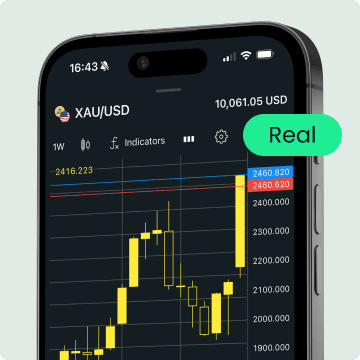
Exness Trade app
Trade with confidence anytime, anywhere.
How has your routine changed since you started trading?
When you're starting out, you want to be involved in every opportunity. Every move feels like it could be the opportunity of your life.
Experience teaches you there will be another one. That helped me move away from the anxiety and FOMO I had earlier in my career.
My tools have changed too. In the past, I used different platforms for analysis and had to calculate things such as risk, stop loss, and position size separately. Now I use the Exness Terminal to analyse charts, manage risk, and trade from one place.
The process is simpler, but the biggest change is psychological: I'm much more relaxed about missing an opportunity.
How important is mindset compared with having a defined strategy?
For me, the strategy comes first.
Having a solid strategy is so important. When your rules are clearly defined, you don't have to reinvent your decision every time something happens. You merely execute the plan.
Many people have a strategy. The challenge is following it when emotions become involved.
How do you prevent emotions from taking over?
One of the most useful things is simply to pause.
Before pressing the button, I ask myself: “Are you sure you want to do this?”
It sounds simple, but that pause allows the rational part of your brain to take control. I compare it to a rule I've heard about NASA astronauts: during a crisis, they don't react immediately because those first seconds can be dominated by emotion.
Trading can be similar. You need to recognize whether you're making a decision because it fits your strategy or because you're bored, afraid, greedy, or experiencing FOMO.
What have volatile markets taught you?
I actually like volatility. Movement creates opportunities, particularly for the way I trade.
I’ve experienced market drops that were much larger than expected. Those periods made me more cautious about risk and more conscious of keeping a larger margin buffer for unexpected moves.
Another lesson is that doing nothing is also a trading decision. Early in my career, I traded oil during a major move because everybody was talking about it. The price was falling, but I kept adding positions because I wanted to participate. Looking back, watching from the sidelines would have been the better decision. You don't have to participate in every move.
What is your most important rule for risk management?
Capital protection comes first.
People spend a lot of time learning where they should buy or sell. I think they should spend more time learning how to manage risk.
My personal rule is to risk less than 1% per trade. But you also have to consider total risk across the account. One position isn't the same as having many positions open simultaneously.
I tell people their mission as a trader isn't simply to make money. First, learn how to protect it. Risk management lets you remain in the market long enough to follow your strategy.

Smart trading starts with risk management
Safeguard your trades with unique price gap protections, and market volatility alerts.
Why does execution quality matter?
You really understand execution when you experience high volatility.
In a fast market, the price can move between the moment you decide to trade and the moment the order is executed. If you enter at a price that’s worse than expected, you're immediately further away from your target and closer to your stop loss.
For me, good execution means speed, precision, and very low slippage.
Once I've established that a broker is secure and properly regulated, I turn my attention to execution and withdrawals.
What do newer traders misunderstand about spreads and broker conditions?
When you open a trade, the spread means the market has to move before you reach break-even. That becomes important for traders opening multiple trades because small differences accumulate.
I look at the full picture: spreads, execution, slippage, withdrawals, and protections such as Negative Balance Protection and 0% stop out. For me, the broker has to support the way I trade rather than add unnecessary friction.
Which emotions are the most dangerous for traders?
Fear and greed. Fear of losing money and greed for more can influence almost every decision. FOMO was particularly difficult for me when I started because there was always another analyst talking about another opportunity.
Over time, I realized trading is more like an ultramarathon than a sprint. You're not trying to become successful through one trade. You're trying to make rational decisions repeatedly over a long period.
What is one trading misconception you would like to change?
That one trade will make you a millionaire.
Trading appears simple, but that doesn't mean it's easy. The principles can be simple: have a plan, manage your risk, and follow your rules. Executing them consistently when money and emotion are involved is difficult.
I also think trading education puts too much emphasis on signals and indicators. Much more attention should go towards money management, risk management, and understanding yourself as a trader.
How do withdrawals fit into your approach to capital management?
Making money and managing money are different skills.
I separate my capital into different “buckets”, trading, personal spending, and long-term investing. I’ve found that having control over your capital, with the ability to withdraw anytime, anywhere, and knowing your withdrawal request will be automatically processed within seconds,1 helps reduce the pressure of the trading itself.
But I always try to balance withdrawing too much and too little, as too much can leave you without sufficient working capital.
What advice would you give a trader who wants to become more consistent?
Know yourself. In my first years, I tracked almost everything: the instrument, the hour, the day, and whether I was buying or selling. That helped me identify where I performed better and where I struggled.
Most importantly, a difficult day or week needs to be taken into consideration alongside your wider trading history. Keeping records gives you something to review beyond how you feel about the latest result.
Discipline matters outside trading too. For me, it runs through training, nutrition, family time, and work. Practicing it in those parts of my life helps me bring it to trading.
The goal isn't to remove emotion completely. It's to recognize when emotion is trying to make the decision for you and give the rational mind enough time to take control.
This article does not constitute investment advice. Past performance is not indicative of future results. The information, data, prices, and market conditions presented in this article are accurate as of the publication date and may change over time. Your capital is at risk. Please trade responsibly.
- At Exness, over 98% of withdrawals are processed automatically. Processing times may vary depending on the chosen payment method.