

Treasury diversifies borrowing with panda bond, sukuk options on the table

Kenya's National Treasury is extending its borrowing plan for the 2026/27 financial year across multiple currencies and instruments. Rather than relying solely on the dollar eurobond market, the Treasury is considering alternative instruments for its 5.4 billion USD external-financing plan through June 2027.
Kenya's plan includes an 815 million USD eurobond and 881 million USD from Japan, with a 300 million Chinese panda bond and 500 million USD Islamic sukuk in reserve, both of which are still pending legal and regulatory approvals.
Kenya's approach also includes a debt-for-food swap with the World Food Program worth 1 billion USD supported by the US International Development Finance Corporation.
For market participants, the mix of currencies and financing sources may affect external funding needs, debt-servicing expenses, investor confidence, and the market conditions in Kenya.
Why is Kenya diversifying its external borrowing?
Kenya's Public Debt Management Office reported that, as of March 2026, Kenya’s public debt has risen to 91.7 billion USD, equivalent to about 70% of GDP, above the standard 55% limit set by Parliament under the country's fiscal responsibility law.
The International Monetary Fund (IMF) projects that the debt-to-GDP ratio will likely rise to 71.6% in 2026 and 72.4% in 2027, as persistent budget deficits keep borrowing needs elevated.
The diversification also reflects the 2.34 billion USD IMF program, which ended in April 2025 without replacement, removing a cheaper funding channel. The end of the funding has put pressure on the Treasury to widen its borrowing net.
Spreading external debt financing across several currencies may reduce reliance on a single market. It may also reduce the average cost of new borrowing, though that outcome depends on how each instrument is priced.
Since repayment obligations often involve foreign currencies, changes in interest rates and currency markets may affect the cost of servicing external obligations when measured against domestic revenues.
Financing from Japanese, Chinese, and Islamic capital markets alongside multilateral lenders also supports the government's objective of minimizing the long-term cost of public debt while accounting for associated risks.
For Kenya, the diversification plan is more than just new sources of income. The country aims to change the overall risk of its debt portfolio by carefully considering the currency, maturity, interest rate, and investor base of each instrument.
The tightest spreads in the industry
We outperformed 15 other brokers with spreads 50% lower across 28 forex pairs.*
Exness Pro account spreads were 50% lower than the average spreads of 15 other brokers on 28 forex majors and minors during the week of 5–10 April 2026, when comparing the tightest spread-only accounts.
What does the Kenya Treasury borrowing plan include?
Kenya currently has a 5.4 billion USD external-financing plan to cover the country's external financing needs through mid-2027. The Kenyan Treasury’s borrowing plan sets out four main channels for 2026/27, according to the Treasury's annual borrowing program. These channels include:
- 815 million USD eurobond
- 881 million USD raised through yen-denominated instruments
- 300 million USD panda bond and 500 million USD sukuk
- 1 billion USD debt-for-food swap
The largest part of the financing plan is the 815 million USD eurobond, which is expected to be priced in the Kenya eurobond 2026 window between October and December. Alongside this is the 881 million USD, which would be raised through yen-denominated instruments, also known as samurai bonds in Japan's domestic market.
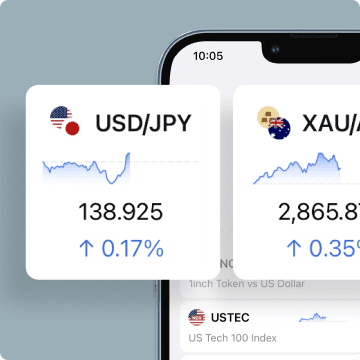
USDJPY can provide context on movements between the dollar and yen as Kenya considers increasing its exposure to yen-denominated borrowing.

Samurai bonds are known to have lower coupons than dollar Eurobonds, a gap that has drawn several African countries toward the yen market. The combination of the 881 and 815 million USD makes up more than half of the total financing plan.
Meanwhile, the 300 million USD panda bond and 500 million USD sukuk are not guaranteed. The Kenyan Treasury has flagged both plans as contingent on legal and regulatory approvals before any issuance can proceed.
Kenya would sell the panda bond in China's domestic bond market, denominated in yuan, making the country the second African sovereign to complete a sale after Egypt.
The plan also includes a non-market component: a 1 billion USD debt-for-food swap, structured with the World Food Programme and backed by the US International Development Finance Corporation, scheduled for March 2027.
A swap of this level redirects a portion of debt-service payments toward an agreed development goal. In this case, the payment will be directed toward food security.
How does the plan affect Kenya's financial markets?
The plan may affect investor sentiment because having a credible financing plan reduces uncertainty around how a government intends to meet external obligations.
The timing and pricing of Kenya's Treasury borrowing plan may influence how investors assess its ability to manage future repayments.
The plan may increase foreign-currency exposure. Since the eurobond, samurai, and likely panda transactions would involve other currencies and markets, there is a possibility of a lower cost of servicing debt obligations.
What should forex traders watch out for?
Market participants interested in Kenya's economy may choose to focus on the interaction between external debt financing, fiscal policies, and global market conditions.
The outcome of the planned eurobond between October and December may provide information on how international markets are pricing Kenyan sovereign risk.
Market participants may also watch the progress of the proposed panda bond and sukuk, since they are subject to approvals. Any announcement regarding their authorization may alter expectations about Kenya's financing mix.
In addition, traders may monitor the government's ability to narrow the budget deficit and control debt-servicing costs.
Conclusion
Kenya's external financing strategy for 2026/27 is a shift toward diversified borrowing. The strategy may give Kenya more flexibility in managing its financing sources. However, it is unlikely to solve Kenya's debt problem.
What will determine whether the strategy reduces or increases future risk is the final cost of implementation, currency exposure, maturity profile, and the use of each financing instrument.
For forex traders, clear signals will come from the eventual pricing of new debt, changes in external financing conditions, foreign exchange reserve trends, global interest rates, and Kenya's progress on fiscal consolidation.
For more information on external debts, visit Exness Insights. To follow up on the progress of the Kenya Treasury borrowing plan, visit the Exness Blog page.
This article does not constitute investment advice. Past performance is not indicative of future results. The information, data, prices, and market conditions presented in this article are accurate as of the publication date and may change over time. Your capital is at risk. Please trade responsibly.