

NSE adds 350 billion KES in June, its strongest month since 2008

The Nairobi Securities Exchange (NSE) saw its biggest one-month market cap rise since 2008. The NSE achieved a positive market value of approximately 350.5 billion KES, bringing total NSE market capitalization to a new high of 3.76 trillion KES.
Renewed investor confidence, improved banking stocks, and foreign investors buying Kenyan stocks amid global economic uncertainty drove NSE market performance during the month. The NSE's H1 2026 performance placed it among the world's best-returning equity markets, alongside the Nasdaq Composite, the FTSE 100, and the Shanghai Composite.
Foreign investors on the NSE earned an 18.8% dollar return in H1, according to MSCI Frontier and Emerging Markets index data, reinforcing the exchange's position as one of Africa's strongest performers.
For investors, the ranking has made Kenya one of the most lucrative equity markets in the world in terms of returns so far in the first half of 2026. Better equity markets can translate to rising economic sentiment and foreign investment.
How has the NSE market performance improved in H1?
The first six months of 2026 changed the valuation of the NSE market performance by any regional or historical measure. Total market cap moved from 2.945 trillion KES at the end of December 2025 to 3.762 trillion KES by 30 June, an increase of 817.2 billion KES. Investors added 531.0 billion KES in market value during Q2 alone, as improving corporate earnings and bank-led buying gathered pace.
In June alone, every benchmark recorded high numbers. The NSE 10 led with a gain of 11.83%, followed by the NSE 25 at 9.72%, the Banking Sector Index at 9.26%, the NASI at 8.97%, and the NSE 20 at 6.90%.
All Indexes recorded double-digit increases for the first half of 2026. The NASI gained 20.14%, the NSE 25 posted a 21.82% return, the NSE 10 returned 22.61%, while the Banking Sector Index was the top gainer, returning 25.27%. All indices reached their highest level since 2018.
Large-cap companies drove the H1 rally, as Safaricom created 282.8 billion KES in shareholder value during the period, which accounts for more than one-third of the market’s total increase.
Equity Group added 99.6 billion KES, Co-operative Bank 92.5 billion KES, I&M Holdings 75.1 billion KES, Absa Bank Kenya 58.4 billion KES, Stanbic Holdings 52.0 billion KES, and KCB Group 48.9 billion KES.
The June momentum carried into July. Every major equity Index extended its 2026 return beyond 25% in the week ending 24 July. The Banking Sector led year-to-date at 30.57%, followed by the NSE 10 at 27.60%, the NSE 20 at 27.34%, and the Nairobi All Share Index at 25.13%.
Listed companies added 31.9 billion KES in value during the week ending 24 July, lifting NSE market capitalization by 0.82% to 3.918 trillion KES. The market’s value has now risen 33.06% year-to-date, outpacing gains across the major price indices.
While the buying composition has shifted, foreign investors turned net sellers during four of the five sessions in the week ending 24 July, selling a net 965.4 million KES, the largest weekly outflow since March.
Domestic investors absorbed much of the supply, keeping all major indices positive, but the dynamic is a meaningful change from the foreign-led inflows in H1.
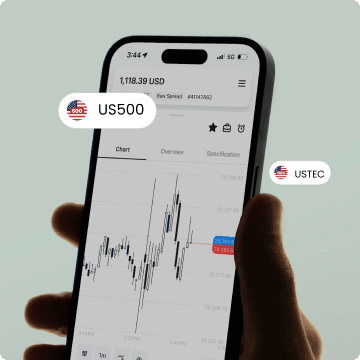
Access top global indices
Trade leading stock indices across the US, UK, China, Germany, and Japan, with ultra-fast execution and low and stable spreads.*
Spreads may fluctuate and widen due to factors including market volatility, news releases, economic events, when markets open or close, and the type of instruments being traded.
What events drove the rally?
The Central Bank of Kenya's extended easing cycle contributed to the numbers. As lending rates declined and asset quality improved, the banking sector earnings recovered, attracting renewed institutional interest.
Family Bank’s Q2 listing further expanded the exchange's market capitalization and strengthened the banking sector's representation on the exchange.
Apart from monetary policy, a series of new listings and large-scale corporate transactions affected market structure during H1. The most significant event was the Safaricom block trade completed on 30 June, which accounted for 204.3 billion KES and dominated equity turnover for the month
Vodacom's acquisition via the Nairobi Securities Exchange lifted the June turnover and volume above typical monthly levels and contributed materially to the NSE market capitalization gains.
Another important event was renewed foreign participation. Prior to this, many international investors had cut back on emerging markets investments as a result of high levels of global uncertainty. As markets settled down, though, some African markets offered attractive valuations and improved economic fundamentals.

Changes in investor confidence meant the Nairobi Securities Exchange benefitted from increased foreign investment, boosting trading volumes.
Together, these events formed the foundation for one of the NSE's most consequential first halves on record.
Why does the Nairobi Securities Exchange rally matter for market participants?
The Nairobi Securities Exchange and the forex market both trade multiple asset classes but are affected by the same macroeconomic forces.
For example, if a central bank implements a new monetary policy, that decision may impact interest rates, bond yields, equity valuations, and the demand for the currency all at once.
Lower domestic rates may make some fixed-income assets less appealing compared to equity assets, and more confident expectations of economic activity could lead to improved corporate earnings.
This also applies to global interest rates as international investors compare potential returns across markets rather than assessing Kenya in isolation. If global yields rise, investors may want to reduce riskier exposure to emerging markets while still leaning towards better-performing markets.
However, if the rally continues and there are expectations of lower global rates, it can encourage investors to seek higher returns in markets such as Kenya.
The June NSE rally therefore offers useful insight into investor risk appetite. It indicates that during the first half of 2026, investors were willing to put more capital into Kenyan listed companies despite uncertainty in global markets.
It does not, however, mean that the trend will continue indefinitely, as equity valuations can reverse quickly when global risk sentiment changes.
Conclusion
The NSE rally raises questions about where capital rotates as the rally matures. Banking stocks, which carried the H1 returns across multiple counters, may tie directly to the trajectory of the CBK's rate cycle and the pace of private sector credit growth.
For traders, what matters is how equity valuations, foreign capital flows, monetary conditions, corporate earnings, and global risk appetite interact to shape the stock market. These factors could be useful in understanding the financial landscape in which markets in Kenya functions.
The rally’s sustainability will depend on whether earnings, capital flows, and macroeconomic conditions continue to support current valuations.
For more information on the global stock market, visit Exness Insights. Market participants can follow the progress of the Nairobi Securities Exchange on the Exness Blog page.
This article does not constitute investment advice. Past performance is not indicative of future results. The information, data, prices, and market conditions presented in this article are accurate as of the publication date and may change over time. Your capital is at risk. Please trade responsibly.